1
Three Ultrasonic Sensors
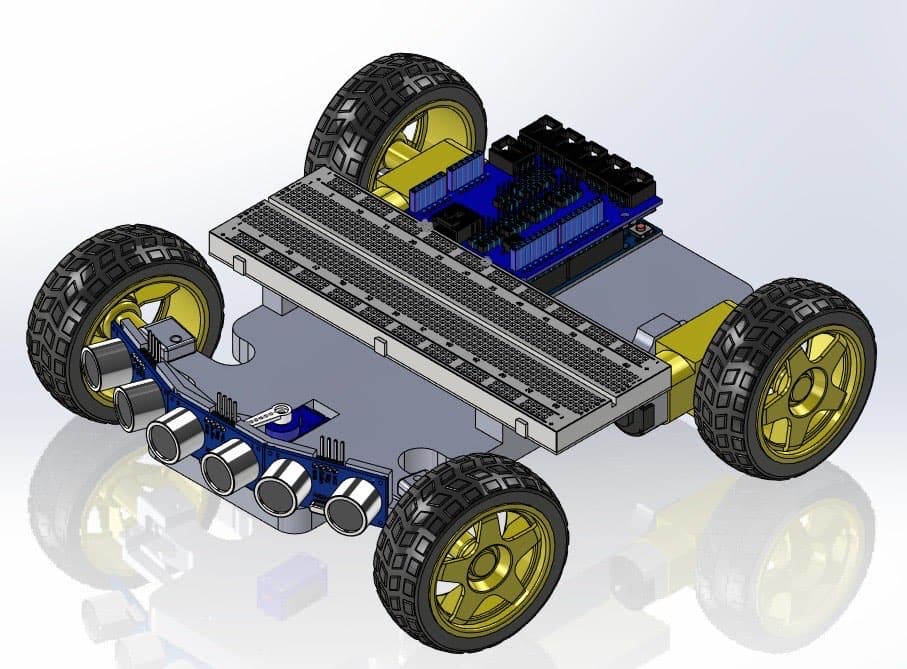
Measured forward and lateral obstacle distances to support real-time steering decisions.
Embedded Systems Project
A speed-focused autonomous vehicle developed to navigate an obstacle course using sensor feedback, servo steering, and bidirectional motor control.
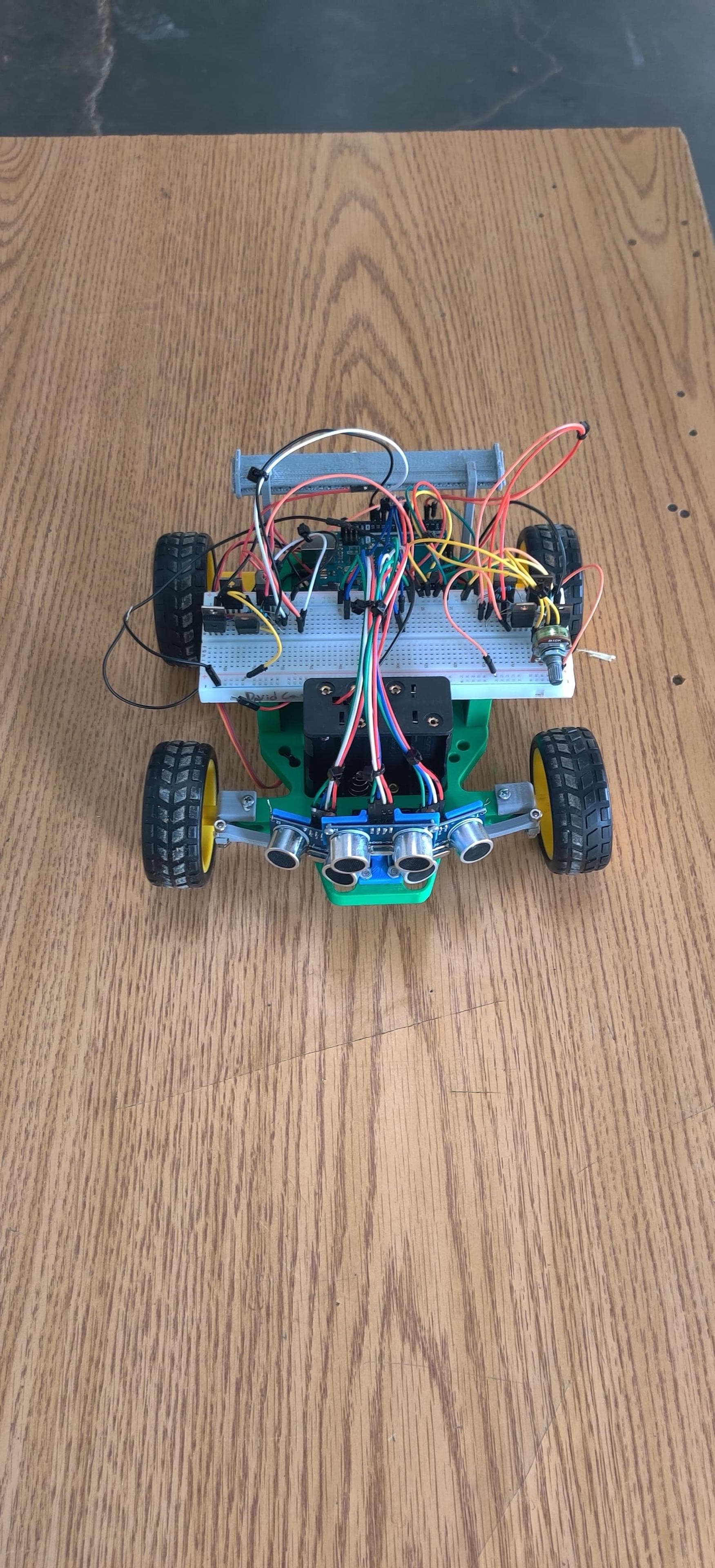
Final autonomous race-car configuration
Duration
4 Weeks
Competition
University Race
Contribution
Programming & Electronics
Result
Second Place
The Objective
Design and program an autonomous vehicle capable of navigating an obstacle course at competitive speed while avoiding collisions through sensor feedback and real-time steering corrections.
The design needed to combine obstacle detection, steering, propulsion, and reverse recovery into one reliable control system.
My Contribution
System Design
Environmental data was collected by the sensors, interpreted by the Arduino, and converted into steering and motor-control commands.
Measured forward and lateral obstacle distances to support real-time steering decisions.
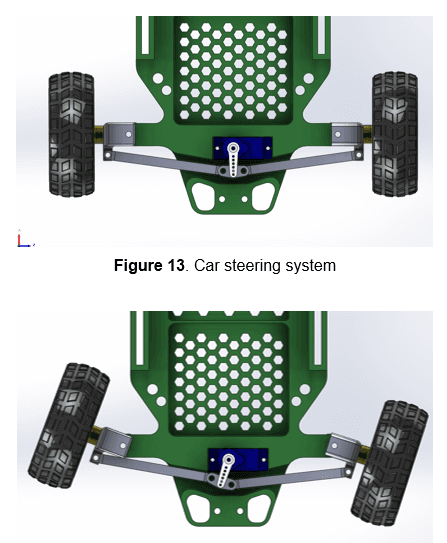
Actuated the front steering mechanism based on sensor feedback from the Arduino.
Allowed the rear drive motors to move forward or reverse during navigation and recovery.
Supported reverse behavior when the vehicle encountered an obstacle or became trapped.
Primary Technical Challenge
The ultrasonic sensors initially produced inconsistent measurements. Because the symptoms could have originated from the wiring, hardware, timing, or control logic, the problem required an iterative troubleshooting process.
STEP 01
Initial testing produced unreliable ultrasonic readings, causing incorrect steering decisions and unstable navigation.
STEP 02
We reviewed the control logic, checked wiring, and tested each sensor individually rather than assuming the code was the only issue.
STEP 03
Multiple ultrasonic sensors were replaced and retested until the hardware produced dependable distance measurements.
STEP 04
The steering and reverse logic were refined through repeated course testing until the vehicle could navigate consistently at competition speed.
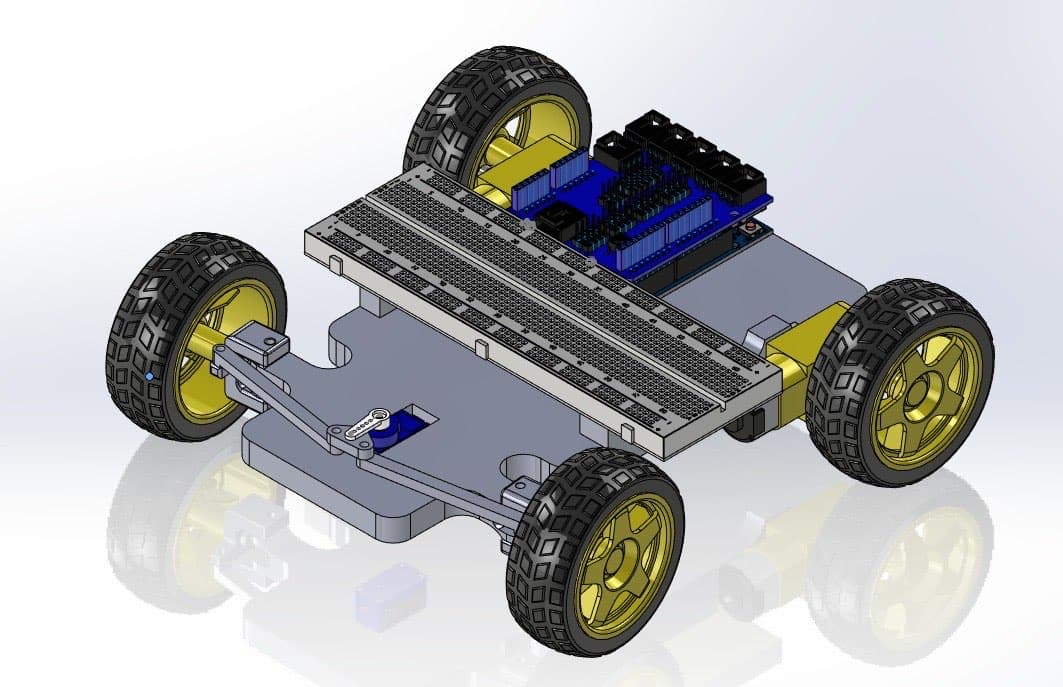
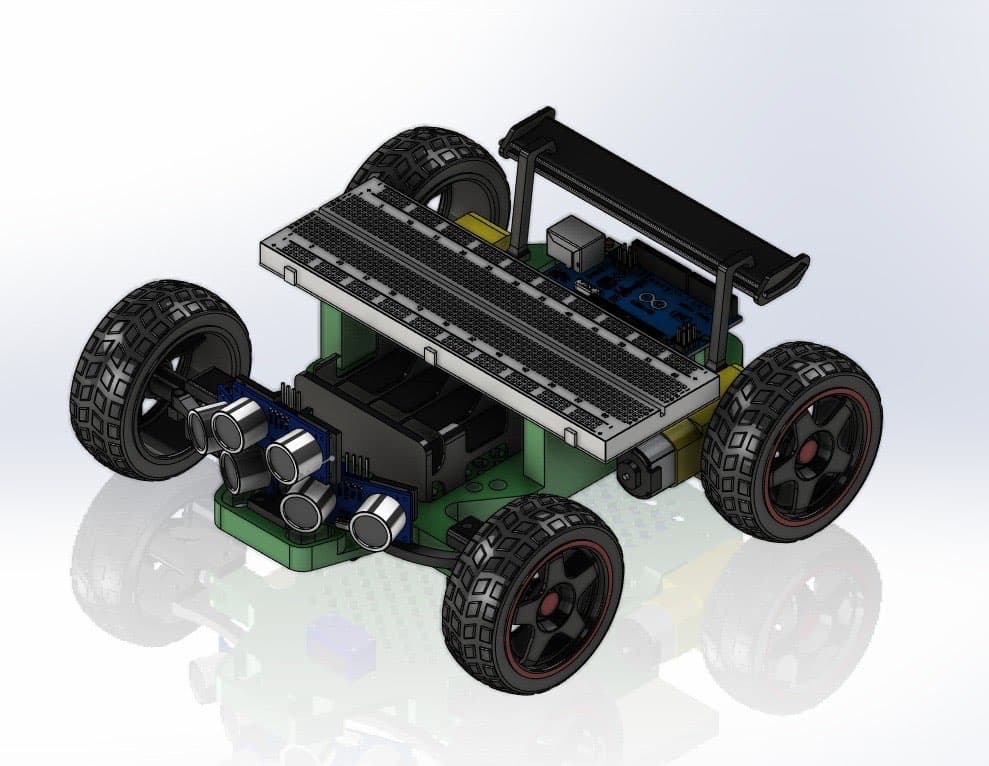
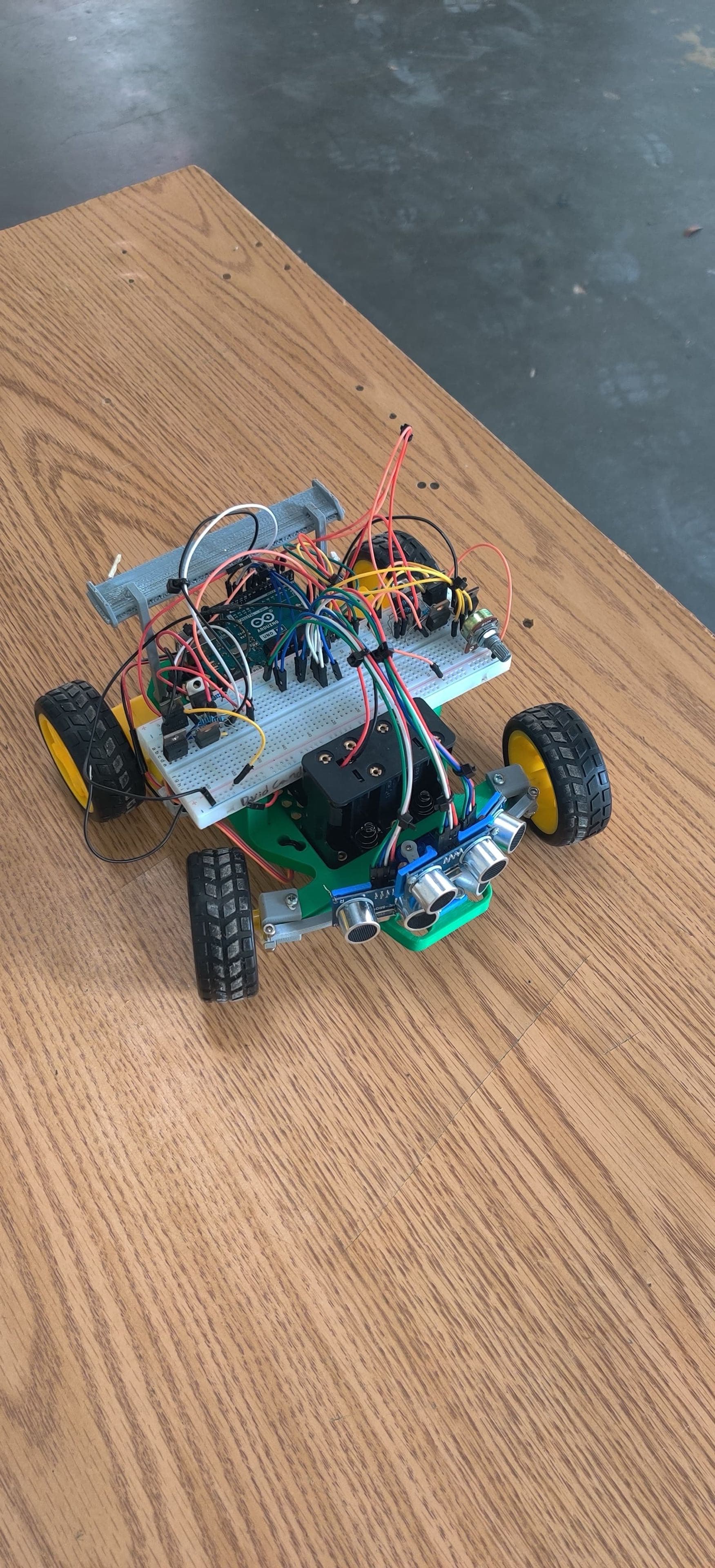
Development Gallery
Demonstration
These videos document obstacle-avoidance testing and the vehicle’s successful competition finish.
Validation of autonomous steering, obstacle detection, and sensor response under realistic course conditions.
The completed vehicle successfully finished the autonomous race and earned second place.
Final Result
The vehicle successfully completed the autonomous course after resolving its sensor and integration issues.
Reflection
Testing components individually made it possible to separate faulty hardware from errors in the control logic.
Inconsistent low-cost sensors increased debugging time and made it more difficult to separate hardware failures from software problems. More reliable components would improve repeatability and reduce unnecessary troubleshooting.
The wheels provided limited traction on the smooth competition floor, reducing acceleration, steering accuracy, and stability. A future design should validate wheel material, tread, and grip on the actual operating surface.
The AA battery configuration did not provide sufficiently consistent power for the combined motor, sensor, and control-system demands. A rechargeable battery pack selected for the required voltage, current capacity, runtime, and weight would improve reliability.
Functional sensors, motors, and code were not enough individually. The complete system required repeated testing and tuning under realistic operating conditions.
Consistently completing the course was more valuable than maximizing speed with unstable sensing, poor traction, or unreliable power delivery.
Technical Documentation
View the complete project report for additional information on the vehicle, control system, testing, and final results.